 MatTested
Downward facing dog Adho Mukha Svanasana, with beginner variations
How to do downward facing dog step by step, the one mistake almost everyone makes at first, and the variations that make the pose work for your body.
- For every level
- Hold for one breath or longer
- Part of every sun salutation
The asana in one breath
Downward facing dog is about a long torso, not straight legs. Push the mat forward with your hands and back with your feet, and let your knees bend or your heels lift so your back can stay long.
- An active asana, and one of the most common transitions between standing and the floor.
- The goal is a long, straight back from your hands to your hips.
- Your heels don't need to touch the mat. Let them reach toward it.
- Bent knees, lifted heels, or both are part of the pose, not a lesser version of it.
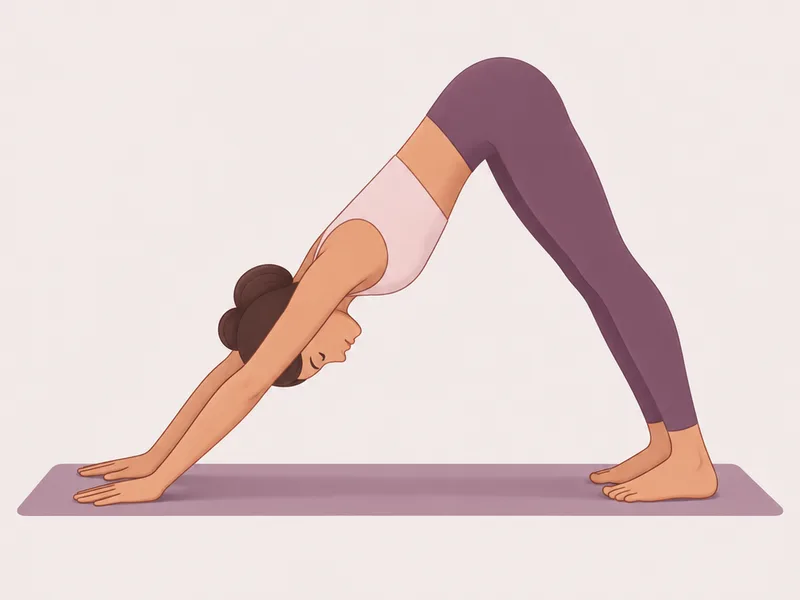
- You'll feel
- A stretch along the back of your legs, and your arms and shoulders working.
 By Emilija, RYT 200 certified yoga teacher
Updated
What is downward facing dog (Adho Mukha Svanasana)?
Downward facing dog, or Adho Mukha Svanasana in Sanskrit, is the asana where your hands and feet are on the mat and your hips lift toward the ceiling, so your body makes an upside-down V. Most people simply call it downward dog, or down dog.
It's one of the first asanas you learn in a yoga class, and it stays with you in almost every class after that. It's part of every sun salutation, it takes you from standing down to the mat and back up again, and it works just as well as a warm-up as it does later in class, when your body is warm and you can stay a little longer.
The goal: a long torso, not straight legs
Here's the most important thing to know about downward facing dog. The purpose of the asana is to lengthen your torso. Your back stays long and straight, from your hands to your hips.
Straight legs and heels on the mat are what we usually see in photos, so it's natural to aim for them. But when the back of your legs (your hamstrings) isn't ready yet, pushing your heels down makes your back round, and the pose loses its point. That's why, in this guide, your legs adjust to your back, not the other way around.
How to do downward facing dog, step by step
The easiest way into the asana is from tabletop, on your hands and knees.
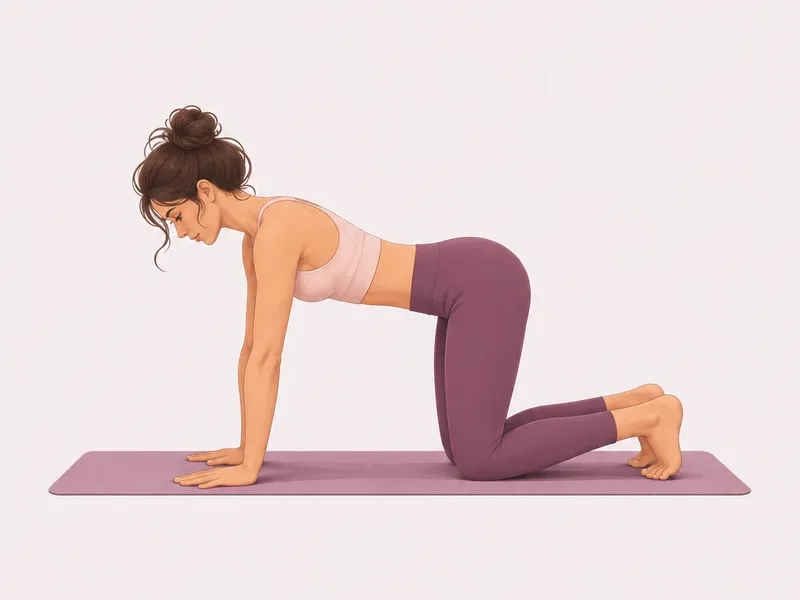
- Hands under your shoulders, fingers spread.
- Knees under your hips.
- Toes tucked under, ready to lift.
- A long, flat back and a long neck.
- Start in tabletop. Hands under your shoulders, knees under your hips, toes tucked under.
- Spread your fingers and press the whole palm into the mat. Your hands can turn slightly outward if that feels better for your wrists.
- Lift your hips up and back, toward the ceiling. Keep your knees bent at first, so your back stays long.
- Adjust your legs. Bend your knees, lift your heels, or both, until your back is long and straight. Feet can be hip-width apart or a little wider.
- Push the mat away. Press it forward with your hands and back with your feet, and imagine your heels reaching toward the mat.
- Stay for one breath or several, depending on your goal, then lower your knees back to tabletop, or choose one of the other ways out.
- Hands push the mat forward, fingers spread, the whole palm pressing down.
- Feet push the mat back, as if you could stretch it.
- Hips lift up and back, toward the ceiling.
- A long, straight back, from your hands all the way to your hips.
This is the full pose, with straight legs and heels on the mat. Notice that downward dog is not a passive pose. Your hands push the mat forward, your feet push it back, and your hips keep lifting, so the whole body is gently working.
My tip for sun salutations: from baby cobra (Bhujangasana), push the mat away with your hands and come to tabletop first, then lift your hips into downward dog. In Sun Salutation A we often stay here for five deep breaths.
The most common mistake in downward dog
This is the mistake I see most often, especially in the first weeks of practice. We want our legs straight and our heels on the mat, so the body finds another way to get there. The back rounds, and the pose loses what it's for.
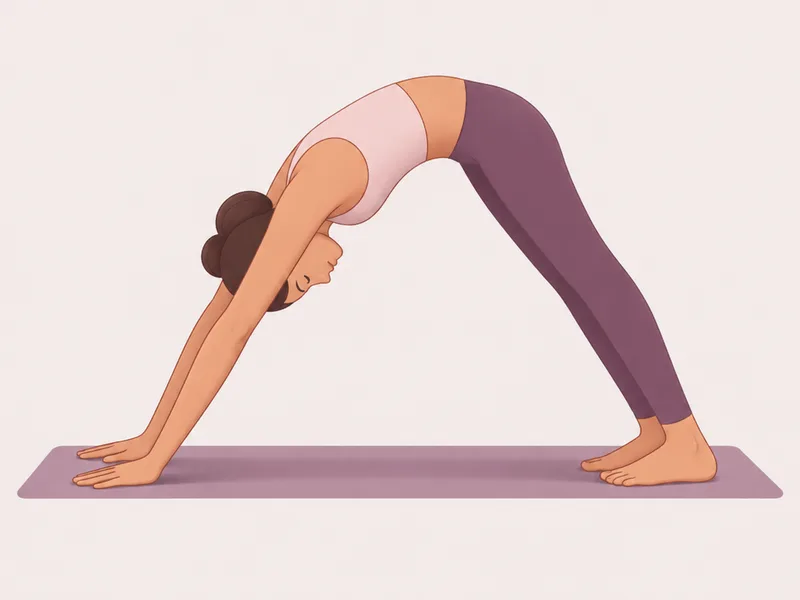
- The back rounds like a curve instead of staying long.
- Heels pressed down at all costs, so the legs can stay straight.
How to fix it
Give your back the space first, then work on your legs. Bend your knees and imagine your belly and chest sinking toward your thighs, then actively lengthen your back. You can also lift your heels and stand on the balls of your feet, or do both. Once your back is long, imagine your heels reaching toward the mat, without letting your back round again.
Downward dog variations for beginners
These downward dog variations are not easier versions you grow out of. They're how the asana fits your body today, and many experienced students keep using them. Try each one and notice which lets your back stay longest. If you're a beginner, start with the last one, knees bent and heels lifted.
Knees bent
Bend your knees and let your belly move toward your thighs. Your heels can stay on the mat. This is the quickest way to feel a long back, especially if your hamstrings feel tight.
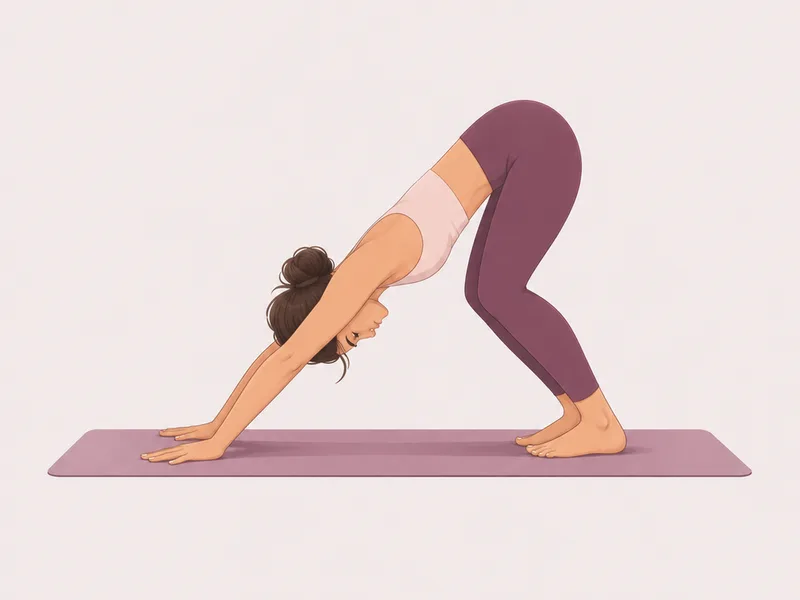
- A long, straight back.
- Knees bent, so your back has room to lengthen. Heels can stay on the mat.
Heels lifted
Keep your legs long and lift your heels, standing on the balls of your feet. Your hips can now go higher, and your back has room to lengthen.
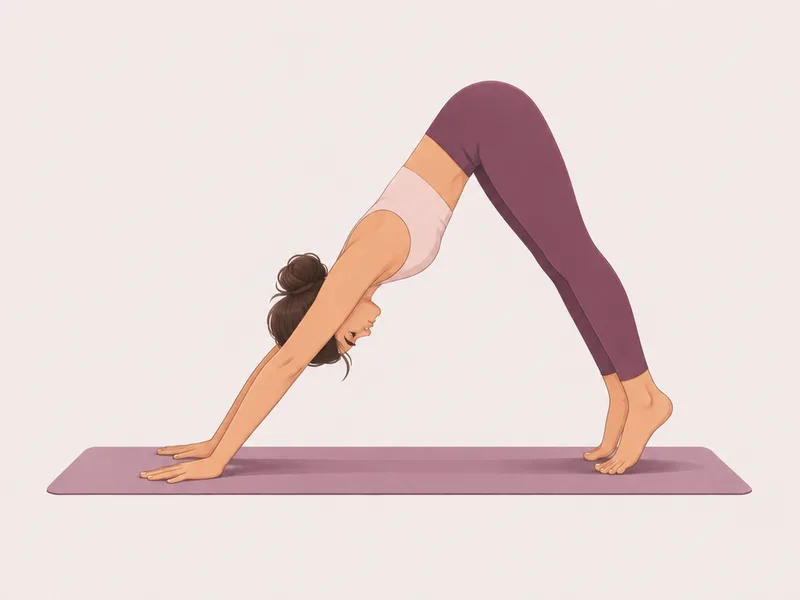
- A long, straight back.
- Heels lifted, so your hips can go higher. Let them reach toward the mat.
Knees bent and heels lifted
My favorite way to start. Bend your knees, lift your heels, and bring your belly close to your thighs. Then push the mat forward with your hands and back with your feet, and imagine your heels reaching toward the mat. You'll feel a stretch in your hamstrings while your back stays long.
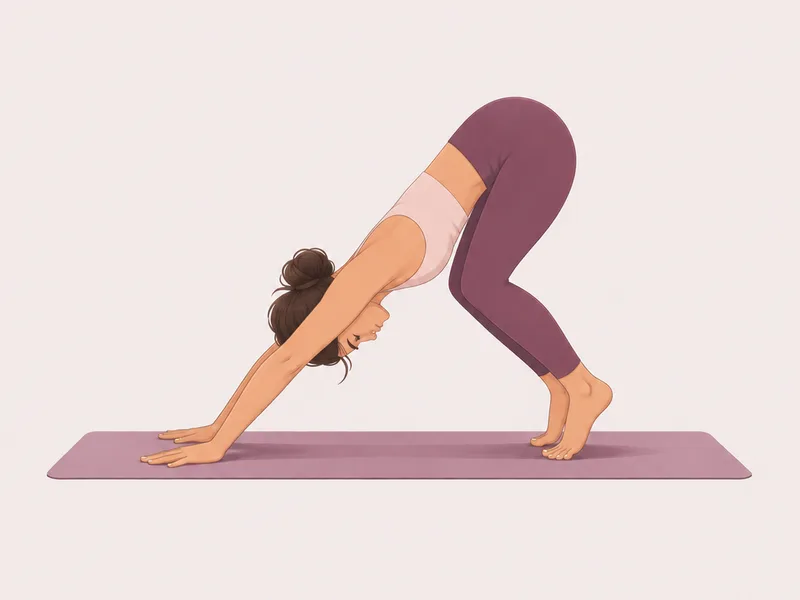
- A long, straight back.
- Knees bent, belly close to your thighs.
- Heels lifted, imagining they reach toward the mat.
Small changes that help
- Feet: hip-width apart or a little wider. Both are completely fine.
- Hands: turn them slightly outward if that feels better for your wrists, and explore what suits you.
- Head: let it relax between your upper arms, with your neck long.
More downward dog variations to explore
Once downward facing dog feels familiar, these variations add strength, play and new stretches. Keep the same rule as before: your back stays long, and your knees and heels adjust to it.
Pedaling the feet
Bend one knee and lift that heel, while the other leg lengthens and its heel reaches toward the mat. Then switch, slowly, like walking in place. It's a lovely warm-up for your hamstrings and calves.
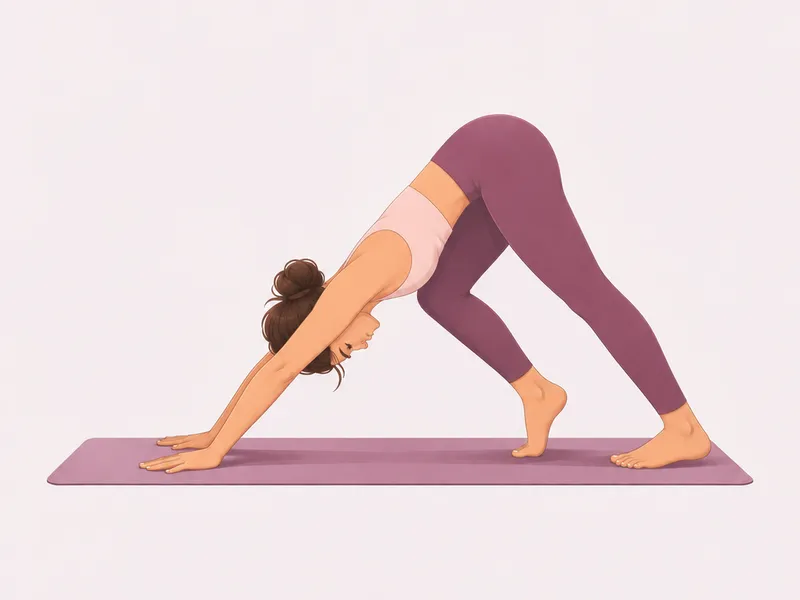
- One knee bends and that heel lifts.
- The other leg lengthens, heel reaching toward the mat.
Three-legged dog (Eka Pada Adho Mukha Svanasana)
From downward dog, lift one leg up and back, so it continues the long line of your back. Keep your hips level and square to the mat, and keep pushing the mat away with both hands. The standing heel can lift a little.
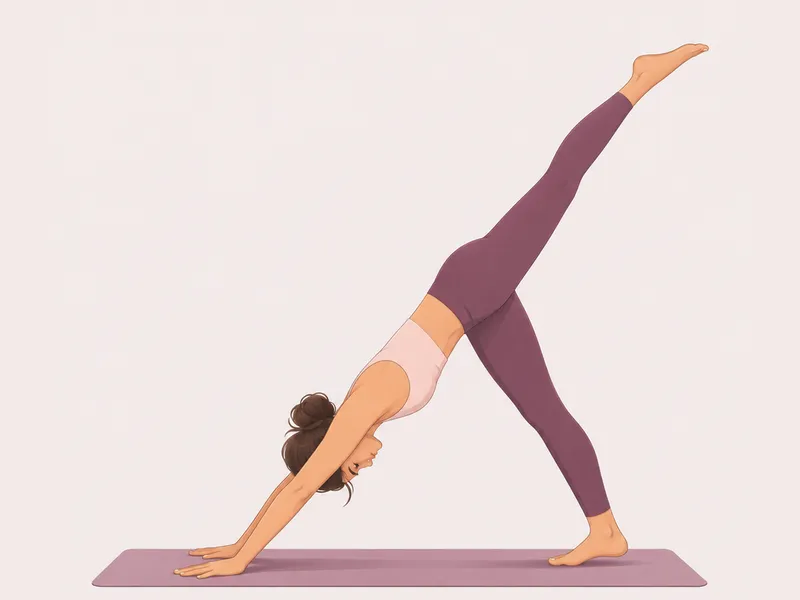
- The lifted leg continues the long line of your back. Keep your hips level.
- Point or flex the lifted foot, or circle the ankle.
- The standing heel can lift a little and reach toward the mat.
When I use three-legged dog to warm up, I like to add small movements with the lifted leg:
- Circle your ankle one way, then the other, to warm up the ankle of the lifted leg.
- Move the leg slowly up and down to wake up the back of the leg, your hamstrings.
- Flex and point the foot a few times. Then stay with the foot either flexed or pointed, whichever feels better.
You can also turn it into a hip opener. From three-legged dog, bend the knee of the lifted leg and let that hip open toward the ceiling, so your hips stack one above the other. Keep both hands pressing into the mat and your shoulders level.
Then lower the leg back down, take a breath in downward dog, and repeat on the other side.
Twist: hand to the opposite ankle
From downward dog, with your feet hip-width apart, keep one hand on the mat, and reach the other hand back to hold the opposite ankle or shin. Your knees can bend softly and your heels can lift. Let your chest open to the side, stay for a few breaths, then switch sides.
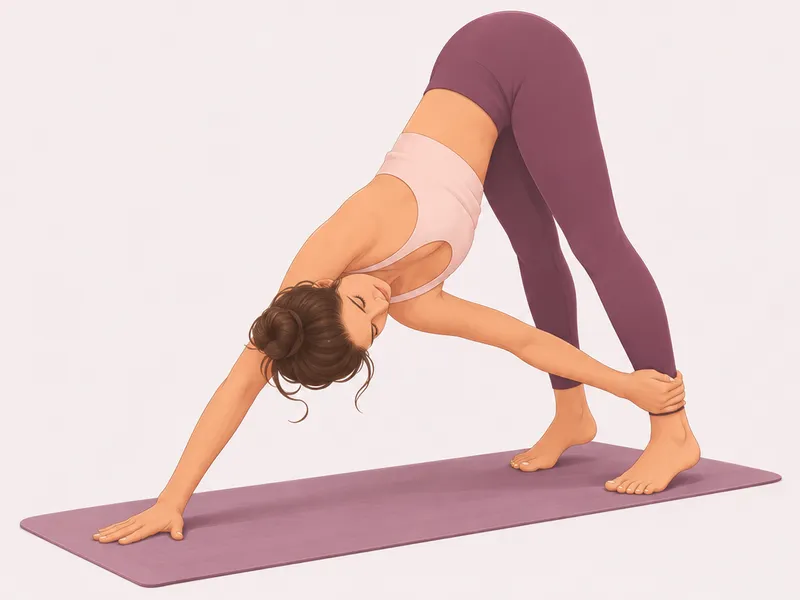
- One hand stays on the mat and keeps pushing it forward.
- The other hand holds the opposite ankle or shin.
- Your chest opens to the side.
Different ways to come into and out of downward facing dog
Because downward dog is a transition asana, there are many ways in and out of it. Which one you choose depends on where you are in your practice and what comes next.
| Position | Into downward dog | Out of downward dog |
|---|---|---|
| Tabletop | Tuck your toes and lift your hips up and back, as in the steps above. | Lower your knees to the mat. |
| Plank | Push the mat away with your hands and send your hips up and back. | Shift forward into plank. Then lower down through Chaturanga Dandasana, like in a sun salutation, or lower your knees to the mat first and then lower down. |
| Standing forward fold (Uttanasana) | Place your hands on the mat and step back one leg at a time. Or jump back to plank, then lift your hips into downward dog. | Walk your feet to the front of the mat, in big steps or small steps. Or bend your knees and jump forward between your hands. |
When to use downward dog in your practice
- As a transition: sometimes you stay for just one breath. It takes you on to Chaturanga Dandasana, helps you come down to the mat to sit or lie down, or helps you come back up to standing.
- In sun salutations: it's part of both Sun Salutation A and B. In A, we often stay for five breaths.
- As a warm-up: pedaling the feet and circling the ankles in three-legged dog gently wake up the legs.
- Later in class: when your body is warm, you can stay longer and explore the variations.
New to yoga? Take my yoga and Pilates quiz to find a style that suits you, and explore more asanas in the asana library.
This guide shares how I teach the asana and isn't medical advice. If you have wrist or shoulder pain, high blood pressure, an eye condition, or you're pregnant, check with your doctor before practicing inversions like downward dog.
FAQ
Should my heels touch the floor in downward dog?
No, they don't have to. Heels on the mat is not the goal of downward facing dog, a long back is. If your heels don't reach the mat, lift them and imagine they reach toward it, without letting your back round.
How long should I hold downward facing dog?
It depends on your goal. As a transition, one breath can be enough, for example on your way to Chaturanga Dandasana, or when you come down to the mat to sit or lie down, or back up to standing. In Sun Salutation A we often stay for five deep breaths. Later in class, when your body is warm, you can stay longer, as long as your back stays long and your breath stays calm.
Is downward dog good for beginners?
Yes, with the right variation. Bend your knees, lift your heels, or both, so your back can stay long. These variations are simply how the pose works for your body today.
What does Adho Mukha Svanasana mean?
Adho means downward, mukha means face and svana means dog. So Adho Mukha Svanasana is the downward facing dog pose.
Why do my wrists hurt in downward dog?
Press the whole palm and the base of your fingers into the mat, so the weight doesn't sink into the wrists. You can also turn your hands slightly outward. If your wrists still hurt, try dolphin pose instead, a separate asana where you rest on your forearms, and check with a doctor or physiotherapist if the pain stays.
Is downward facing dog a resting pose?
No, it's an active asana: your hands push the mat forward and your feet push it back. Once you find your variation, it can feel calm and steady, and that's why we often stay in it for a few breaths.
Written by Emilija
I write every asana guide on this site the way I teach it in class: step by step, with options that meet you where you are.